Expressing the Value of Things Through Paper
Since the 1990s, information and communication technologies—personal computers, the internet, mobile phones—have spread rapidly across Japan. In their wake, digital innovation has advanced at a relentless pace, weaving convenience ever more deeply into everyday life. Meanwhile, paper media—newspapers, books, catalogs, invoices—began a quiet and steady decline.
Amid this shifting landscape, we found ourselves confronting a difficult question:
How can we affirm the value of paper—and of our own existence as a paper company?
We wrestled with this question through periods of uncertainty and frustration, returning to it again and again.
And at last, we arrived at a realization:
To express the value of “things” through paper—
as a paper company—
is something only we can do.
RO-BIKI NOTE: A Crystallization of Paper’s Value
In seeking a way to embody the intrinsic value of paper as an object, we turned to wax paper.*
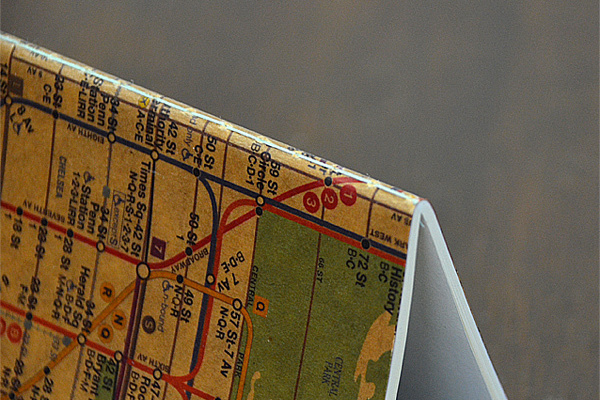
It possesses a singular beauty: the gentle patina and creases that emerge with use, and the quiet translucence born as molten wax fills the minute spaces within the paper’s fibers. These are qualities found only in wax paper.
And yet, this material now stands on the brink of disappearance.
As demand has declined, so too has its place in the world.
In 2009, we introduced the RO-BIKI NOTE—choosing wax paper not only as a material, but as a means of expressing its value and preserving its presence.
The evolving beauty of the waxed paper cover—the subtle discoloration, the soft creases—awakens a sensibility of cherishing things. At the same time, in using it, you become part of sustaining a fading craft, and may feel a quiet sense of pride in doing so.
Through the RO-BIKI NOTE, we hope to share with many the enduring value of wax paper as a tangible object—before it quietly slips from our world.
※Wax paper is created by impregnating paper with molten wax, enhancing it with properties such as oil resistance, water resistance, moisture protection, and anti-corrosion. It has long been used for wrapping foods like caramels and doughnuts, as well as for protecting mechanical parts. Today, however, many of these uses have been replaced by inexpensive synthetic films, and only a handful of factories in Japan continue this process. With a shrinking market, an aging workforce, and aging machinery, the craft is steadily fading.
1990年以降、日本ではパソコン、インターネット、携帯電話などの情報通信技術が急速に普及しました。その後デジタル技術は日進月歩の勢いで進化を重ね、その利便性は生活に深く浸透していきました。一方、新聞や書籍、カタログや伝票などの紙媒体は衰退の一歩を辿り始めました。そんな時代背景において、紙の(紙屋である山本紙業の)存在価値をどう肯定するのかー泥沼のような苦痛や悩みの中で自分自身に問い続けました。
そして「モノの価値」を「紙」を使って「紙屋」として表現する事こそ、山本紙業にしかできない事だ、というアイデアにたどり着きました。
紙の価値を昇華結晶したRO-BIKI NOTE
「モノとしての紙の価値」を山本紙業が表現する方法として選んだのが「ロウ引き紙※」です。ロウ引き紙は特別な魅力を持っています。使用することで産まれる色ヤケやシワなどの風合い、紙層内の空隙(くうげき)を蝋が満たすことで産まれる透明感などは、蝋引き紙だけがもつ美しさです。しかしロウ引き紙は需要の減少に伴い存続の危機が迫っています。山本紙業はこの衰退の一途を辿っているロウ引き紙を使用し、その価値を表現する手段としてRO-BIKI NOTEを2009年に発表しました。
表紙のロウ引き紙の色ヤケやシワが生み出す美しさは、あなたに「モノを愛でる」感覚を思い起こしてくれます。またあなたは衰退しつつあるロウ引き加工の一助となっている誇りを感じる事ができるでしょう。
RO-BIKI NOTEを通して近い将来は無くなってしまうであろうロウ引き紙の「モノとしての価値」を多くの方に知って頂きたいと思っています。
※ロウ引き紙とは紙に融解した蝋を含侵させた紙です。耐油性・耐水性・防湿性・防錆性などの機能を紙に加えることができ、キャラメルやドーナッツなどの食品や機械部品の包装などに使われてきました。しかし残念ながらその多くが安価な化学合成フィルムなどの使用に替わり、日本の蝋引き加工を行っている工場は数えられ程しか残っていません。ロウ引き紙は市場の縮小、職人の高齢化、機械の老朽化により衰退の一途をたどっています。
Soliste 65.0gsm
- Made in Kagoshima Prefecture Japan
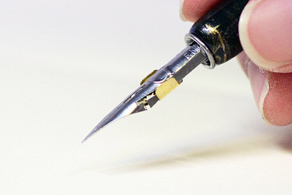
Draw on our own paper wholesaler experience, we carefully selected a special paper for this product. Excellent writing quality, not only for pencils and ballpoint pens, but also for fountain pens and attachment pens. Even fountain pen inks—especially colored inks—show no feathering and no bleeding.
本文:ソリスト 65.0g/㎡
長年の紙屋経験活かし、RO-BIKI NOTEの為に選んだ紙は、鉛筆やボールペンだけでは万年筆や付けペンなどでも気持ちよく書けます。万年筆用のカラーインクでさえ滲みや裏抜けはありません。
Wax Paper
The name RO-BIKI NOTE comes from its waxed paper cover. The more you use it, the more it develops your own unique character through rich color aging and natural creases. Enjoy watching it take on a deeper vintage patina day by day. The subtle translucency created by the wax impregnation of the paper will also capture your interest.
ロウ引き紙
RO-BIKI NOTEは表紙にロウ引き紙を使用していることに由来しています。ロウ引き紙は使用すればするほど色ヤケとシワによるあなた独自のアジワイが加わります。日に日にヴィンテージ感を纏っていく姿をお愉しみください。また紙にロウが含浸することで生まれる透明感もあなたの興味を惹くことでしょう。
Thread Stitch Binding
Thread stitch binding is a traditional bookbinding method in which pages are sewn together with thread, offering exceptional durability and longevity. This technique has been used for centuries and is still widely employed today in the production of high-quality, long-lasting books. In RO-BIKI NOTE, every page—including the cover—is sewn together, ensuring that the pages remain securely bound even when the notebook is opened 360 degrees or used over many years.
糸綴じ製本
糸綴じ製本はページを糸で縫い合わせる伝統的で最も耐久性と長寿命を誇る製本技術です。この技術は何世紀にもわたって使用されており、現在でも高品質で長持ちする書籍の製作に広く用いられています。RO-BIKI NOTEの製本は表紙を含む全てのページに糸が掛かっており、360度ページを開いても、長年使用しても、ページが外れることはありません。